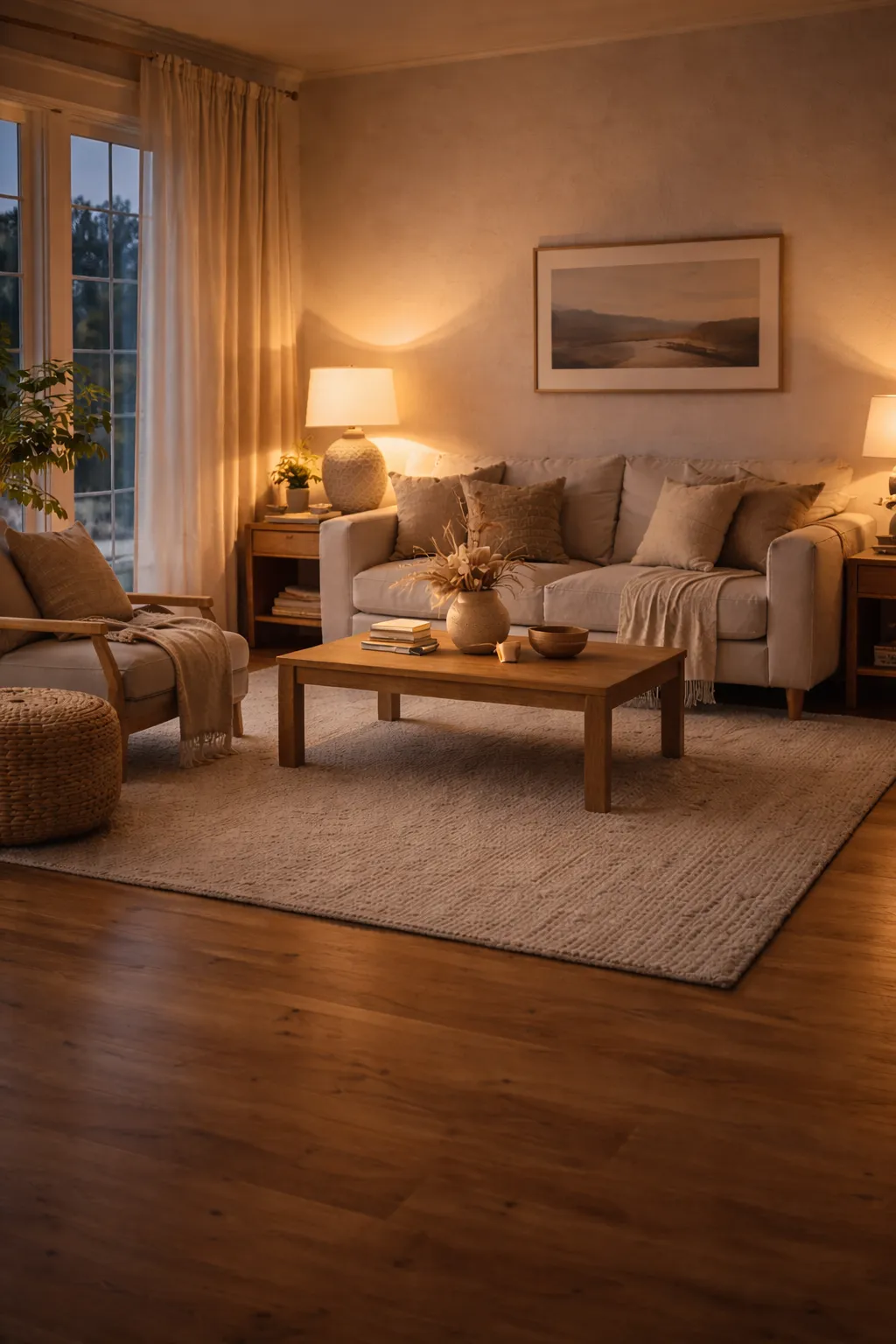
Make a Home Feel Calm
Small Changes That Make a Home Feel Instantly More Calm
A calm home isn’t about buying new furniture or following trends. More often, it’s the result of a few intentional decisions that reduce visual noise and support how you actually live.
Here are small, thoughtful changes that can transform the feeling of a space — without a renovation.
1. Simplify the Color Story
Too many colors competing for attention create subconscious tension. Calm interiors usually rely on one main tone, supported by subtle variations.
Instead of adding contrast through color, add it through texture: wood grain, linen, stone, matte finishes.
Try this:
Choose one dominant neutral and repeat it across walls, textiles, and large furniture pieces

2. Adjust the Lighting (This Matters More Than You Think)
Harsh or overly cool lighting instantly makes a space feel uncomfortable. Calm homes prioritize warm, layered light.
Think in layers:
Ambient light (general glow)
Task light (reading, cooking)
Accent light (corners, shelves)
Avoid relying on a single ceiling fixture.
Try this:
Replace cool bulbs with warm ones (2700K–3000K) and add one small lamp in a corner you currently ignore.

3. Reduce Visual Clutter (But Keep Personality)
Calm does not mean empty. It means intentional.
When too many objects compete for attention, the eye never gets to rest. Editing what’s visible often has a bigger impact than buying something new.
Try this:
Clear one surface completely. Then place back only:
one functional object
one personal or meaningful object
Stop there.

4. Soften Hard Edges With Textiles
Hard surfaces reflect sound and light, making spaces feel louder and colder. Soft materials absorb both — instantly creating comfort.
You don’t need more furniture. You need better softness.
Try this:
Add one of the following:
a larger rug
floor-length curtains
textured cushions in similar tones

5. Create One “Pause Point” in Each Room
Every calm space has a moment where nothing is demanded of you — a chair by a window, an uncluttered table, an open corner.
This gives the room rhythm and makes it feel intentional rather than full.
Try this:
Designate one area where the goal is not productivity or storage — just presence.

Calm Is Built, Not Bought
A calm home isn’t created all at once. It’s built through small, thoughtful decisions that work together.
If you’re unsure where to start, understanding your personal style makes everything else easier.
→ If you’d like guidance tailored to your space, book a consultation — we’re happy to help.
