From Concept to Finished Space
A Real Project Breakdown: From Concept to Finished Space
Every interior design project starts with a feeling rather than a finished image.
In any project, the goal is simple: create a home that feels calm, warm, and intentional, without feeling overly designed or staged.
Below, we walk through our process from first conversation to final result — and highlight the decisions that mattered most along the way.
The Brief: What Clients Want
The client is looking for a space that felt:
Relaxed but refined
Warm, not minimalistic in a cold way
Functional for everyday living
Timeless rather than trend-driven
They want their home to feel cohesive, but still personal — a place that works just as well for quiet evenings as for hosting guests.

Step 1: Understanding the Space & Lifestyle
Before any design decisions can be made, we focus on how the space was actually used:
Where people naturally gathered
How light moved throughout the day
Which areas felt underutilized or visually heavy
This stage is about listening and observing — not decorating.

Step 2: Defining the Design Direction
Instead of starting with furniture, we defined a clear design language:
Soft, neutral tones with warm undertones
Natural materials to add depth and texture
A restrained color palette to keep the space calm
This created a strong foundation that guided every later choice.

Step 3: Key Design Decisions That Make the Difference
A few thoughtful choices shape the final outcome:
Lighting: Warm, layered lighting is used to create atmosphere rather than relying on one central source.
Furniture proportions: Pieces are chosen to fit the space — not dominate it.
Material consistency: Wood tones, fabrics, and finishes are kept within the same family to maintain visual flow.
None of these elements stand out on their own — but together, they create balance.

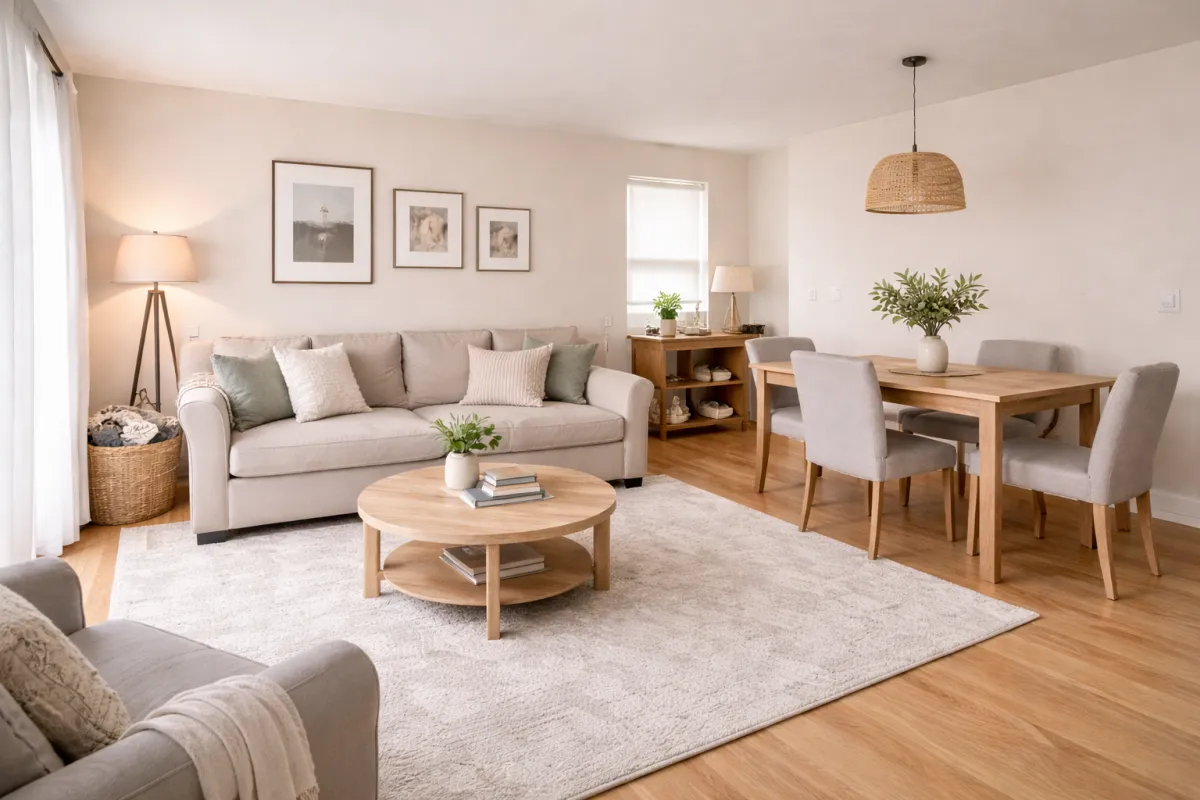
Step 4: The Finished Space
The result is a home that feels composed without feeling rigid.
It’s calm, functional, and adaptable — a space that supports daily life rather than competing with it.

What This Project Shows
Good interior design isn’t about adding more — it’s about making clearer decisions.
When layout, materials, lighting, and proportion work together, a space naturally feels finished — without needing constant updates or trend-driven changes.
Thinking About Your Own Space?
If you’re considering redesigning your home and want clarity before making decisions, we’d be happy to help.
