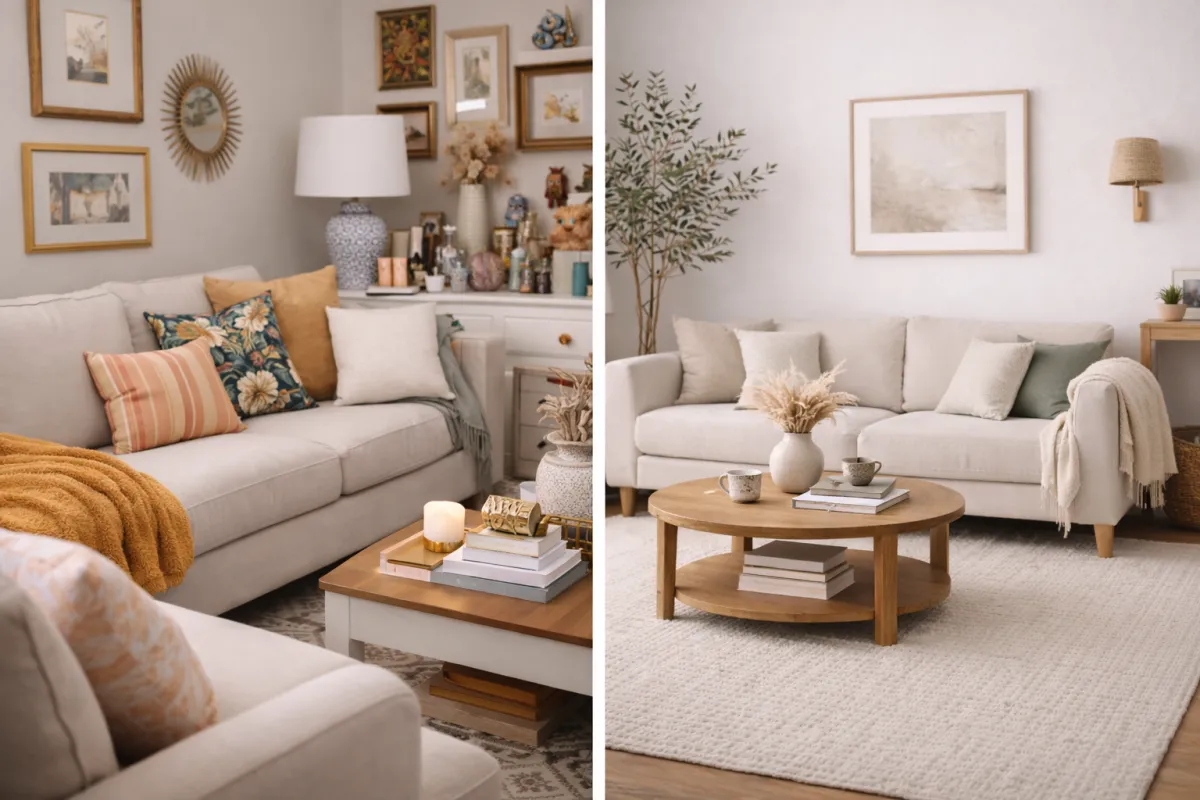
Decorated vs Well-Designed Homes
The Difference Between “Decorated” and Well-Designed Homes
Many homes today are beautifully decorated — yet still feel slightly off.
They may have the right colors, stylish furniture, and carefully chosen accessories, but something doesn’t quite work.
The difference usually isn’t budget or taste.
It’s the difference between decoration and design.
Decorated Homes Focus on Objects while Designed Homes Focus on Space
Decoration is primarily about what you add to a room:
furniture, lighting, art, textiles, and accessories.
Design begins one step earlier. It focuses on how the space works before deciding what belongs in it.
A well-designed home considers:
layout and circulation
proportions and scale
natural light and sightlines
how people move, sit, gather, and relax
Decoration enhances a space.
Design shapes it.

Layout Comes Before Style
A common mistake is choosing furniture before understanding the room.
In decorated spaces, furniture is often selected individually — pieces look great on their own but don’t work together spatially. This can lead to:
blocked walkways
awkward seating distances
rooms that feel smaller than they are
In well-designed spaces, layout decisions come first:
seating is placed to encourage conversation
clear pathways are maintained
furniture proportions are matched to the room
Style is layered on top of a functional foundation.
Consistency Is More Important Than Trends
Decorated homes often follow trends closely — new colors, shapes, or materials added room by room.
Well-designed homes focus on consistency:
a restrained color palette
repeating materials and finishes
visual rhythm across rooms
This doesn’t mean everything looks the same.
It means everything belongs together.

Good Design Feels Calm — Even When It’s Bold
A space can be minimal, classic, or expressive and still feel calm if it’s designed well.
What creates calm isn’t the absence of objects — it’s:
visual balance
intentional negative space
thoughtful lighting
clear hierarchy (what draws the eye first, second, third)
Decorated spaces often try to “fill” a room.
Designed spaces know when to stop.
Why This Matters When You’re Designing Your Own Home
If you’ve ever felt that your home looks nice but doesn’t quite feel right, it’s rarely because of a single item.
It’s usually because:
the layout wasn’t resolved first
pieces weren’t chosen in relation to each other
the overall concept wasn’t clearly defined
This is where interior design adds real value — not by choosing prettier objects, but by creating a space that supports how you live.

Our Approach
At Still Home Interiors, we start with the structure of the space: how it works, how it flows, and how it feels to live in. From there, we develop a clear design direction and carefully select elements that support it.
The result isn’t just a decorated home — it’s a space that feels intentional, cohesive, and deeply comfortable.
Interested in creating a home that feels as good as it looks?
→ Book a short consultation with our designer to discover what ideas we have for your space
